Retrons are bacterial immune systems composed of three components: a reverse transcriptase (RT), a template noncoding RNA that is partially reverse transcribed into RT-DNA, and a toxic effector. During phage infection, the effector is released, triggering host cell death. Beyond their natural role in phage defense, retrons have been adapted as biotechnology tools, particularly for producing single-stranded DNA to serve as donor templates for genome editing.
Retron recombineering for phage genome modification emerged in the early 2020s. Notably, a 2022 study introduced recombitrons, engineered retron systems designed to facilitate continuous, multiplexed editing of phage genomes without the need for counterselection steps. This approach leverages retron-derived single-stranded DNA (ssDNA) to efficiently introduce genetic modifications into phages, enhancing their potential for therapeutic applications.
The development of retron recombineering techniques has significantly advanced the field of phage engineering, offering a scalable and efficient method for precise genome editing. These innovations are paving the way for the creation of therapeutic phages with engineered properties, potentially improving the efficacy of phage therapy in combating bacterial infections and cancer therapeutics.
More Readings:
1. Nature Biotechnology. Phage genome engineering with retrons. 2025, 43, 1244-1245. https://www.nature.com/articles/s41587-024-02392-z
2. Nat Commun. Combination of pre-adapted bacteriophage therapy and antibiotics for treatment of fracture-related infection due to pandrug-resistant Klebsiella pneumoniae. 2022, 13, 302. https://www.nature.com/articles/s41467-021-27656-z
SHARE
Related Post
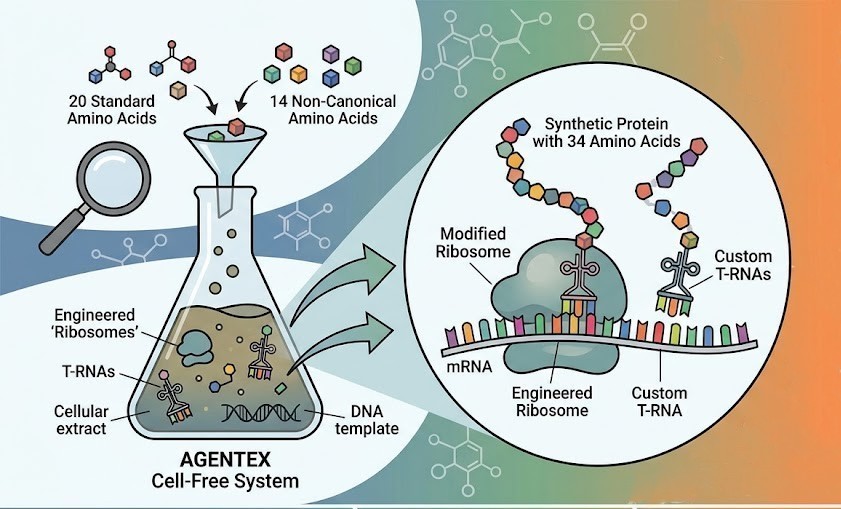
AGENTEX: A New Synthetic Biology Platform Expanding the Possibilities of Protein Engineering
Researchers in Professor George Church’s laboratory at Harvard Medical School, in collaboration...