Shifting from static snapshots to dynamic protein models enables more precise insights for drug discovery and therapy development.
Angiotensin-I converting enzyme (ACE) is a key regulator of bioactive peptides, influencing cardiovascular, renal, and neurodegenerative health, including Alzheimer’s disease. ACE has two catalytic domains, ACE-N and ACE-C, which can form homodimers and exhibit dynamic behavior. How ACE accommodates diverse substrates and functions as a dimer has remained unclear.
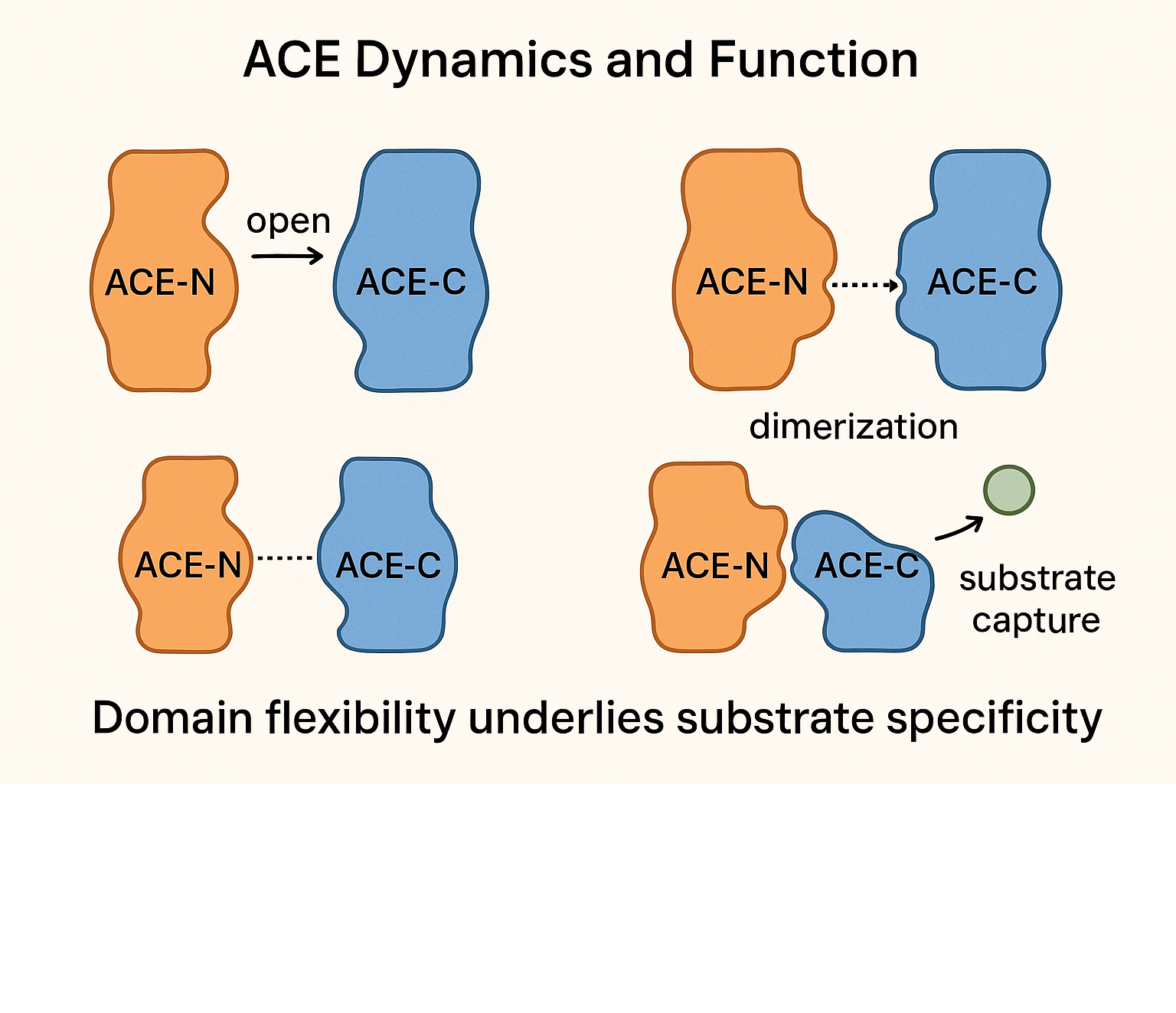
A recent cryo-EM study by Mancl et al. (2025) reveals that soluble ACE adopts multiple conformations—open, intermediate, and closed—within its catalytic domains, with ACE-N being more flexible than ACE-C. Dimerization stabilizes the enzyme, while subdomain mobility regulates substrate binding and specificity. Hydrophobic interactions and N-terminal glycosylation reinforce ACE-N dimerization, explaining differences in stability and dynamics.
These insights support a substrate capture mechanism where domain flexibility underlies substrate specificity, suggesting that therapeutic strategies could modulate ACE domain dynamics rather than fully inhibit activity. This study integrates structural and computational approaches, providing a framework for understanding ACE function and guiding targeted drug design.