The NOS (Nitrogen-Oxygen-Sulfur) is a unique covalent bond between lysine and cysteine within a polypeptide chain. However, its formation requires oxidative conditions and is relatively rare. In contrast, disulfide bonds between two cysteine residues are more common.
The NOS bond functions as a reversible molecular switch, altering protein structure to regulate enzyme activity and ligand binding. This newly identified mechanism complements existing forms of protein regulation, such as disulfide bonds. Found in both pathogenic proteins and human proteins involved in redox signaling, NOS bonds offer valuable insights into disease processes and represent a promising target for drug development and protein engineering.
SHARE
Related Post
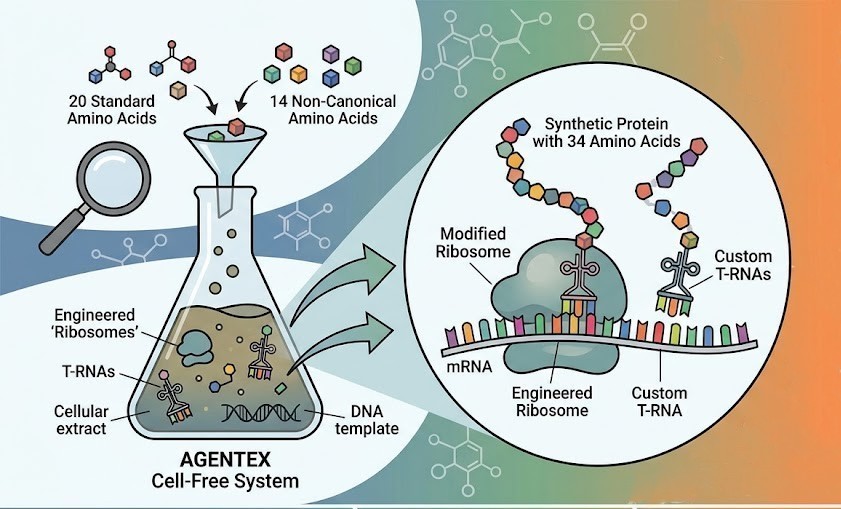
AGENTEX: A New Synthetic Biology Platform Expanding the Possibilities of Protein Engineering
Researchers in Professor George Church’s laboratory at Harvard Medical School, in collaboration...