CAR-T Cell Therapy (Chimeric Antigen Receptor T cell therapy) is an advanced immunotherapy that involves reprogramming a patient’s own T cells to recognize and attack cancer or trouble cells.
The T cells taken from the patient’s blood are engineered to express chimeric antigen receptors (CARs) on their surface. These CARs help the T cells recognize specific targets, like cancer cells. After Expansion, the genetic modified T cells are returned to the patient’s body, where they seek out and destroy cells carrying the target antigen.
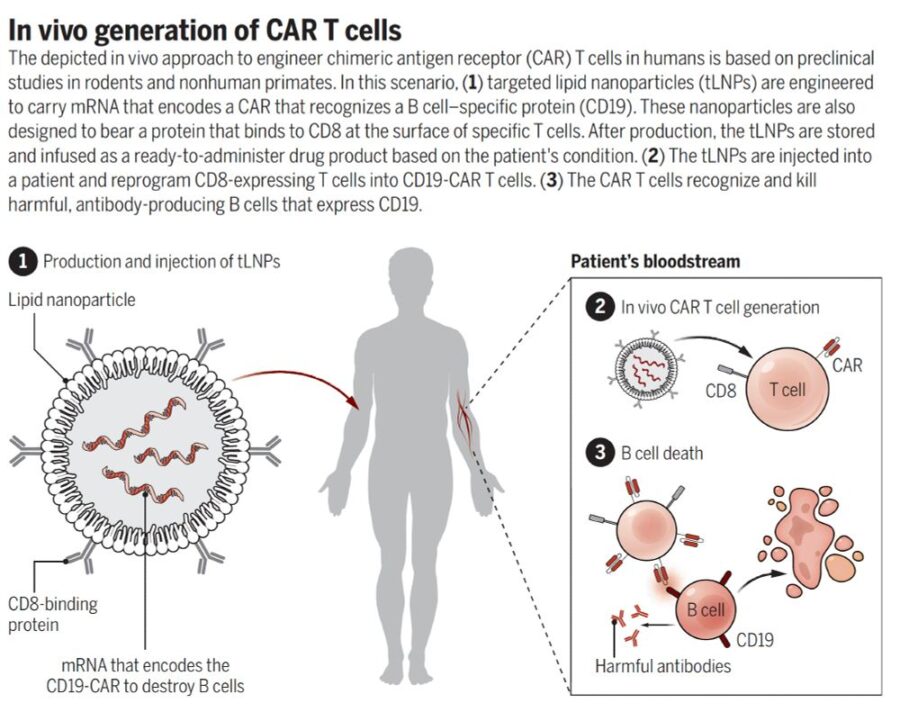
Scientists are now developing in vivo CAR-T therapies using CD8-targeted lipid nanoparticles (LNPs) to deliver anti-CD19 CAR mRNA directly, that eliminate the need for lab-based cell engineering. This new strategy could simplify and scale the therapy for broader use. In rodent and nonhuman primate (NHP) models, this strategy effectively controlled tumors. In autoimmune disease models, it induced deep yet temporary B cell depletion across blood and tissues in NHPs, leading to an “immune reset.”
More Readings
In vivo CAR T cell generation to treat cancer and autoimmune disease