mScarlet3-H: A Next-Generation Red Fluorescent Protein Enabling Versatile Bioimaging
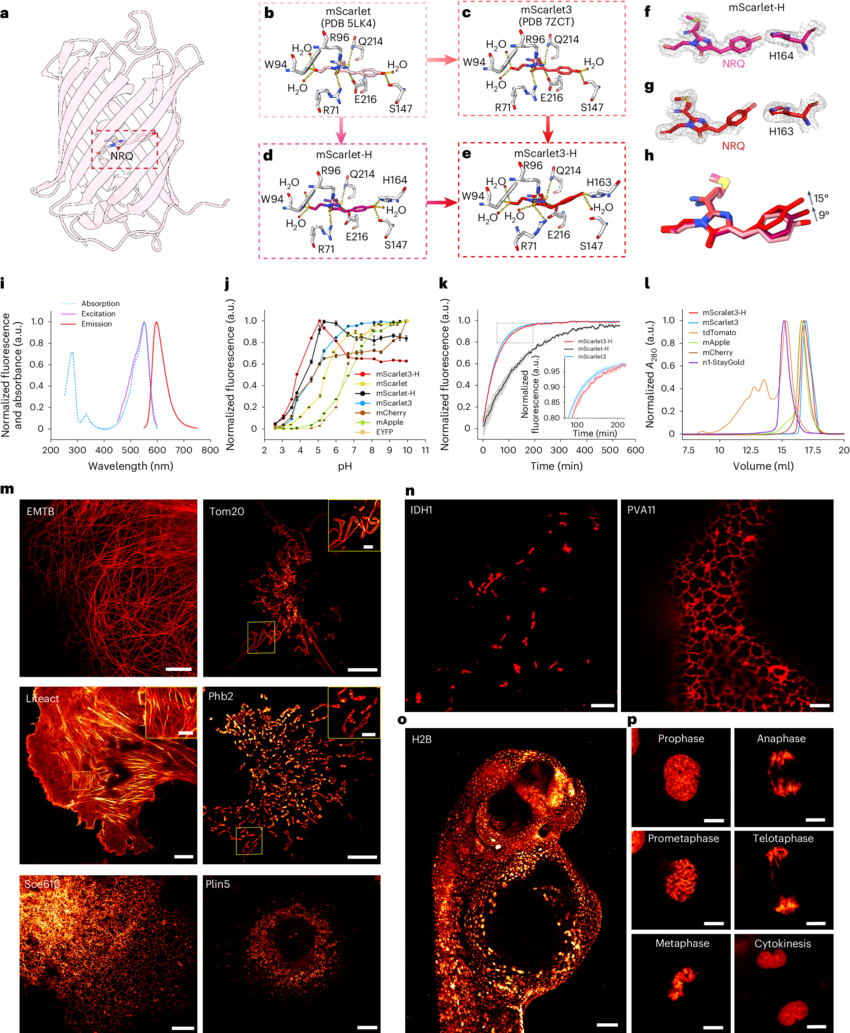
Scientists have developed mScarlet3-H, a next-generation monomeric red fluorescent protein (RFP) that overcomes major limitations of existing RFPs. Engineered for exceptional stability, mScarlet3-H retains strong fluorescence under extreme conditions, including high temperatures, chaotropic stress, and oxidative environments. Its high-resolution structure (1.5 Å) has been resolved, enabling further structural insights.
🔬 Key Capabilities:
Correlative Light and Electron Microscopy (CLEM): Robust fluorescence for multimodal imaging.
Fast Whole-Organ Clearing: Enables clearing in less than 24 hours.
Extended 3D SIM Imaging: Visualizes mitochondria with minimal photobleaching.
High-Quality Dual-Color STED Imaging: Strong signal with excellent specificity.
🌿 Broad Applications:
Benchmarking studies show mScarlet3-H outperforms leading RFPs in photostability and resilience, making it ideal for multimodal imaging across biological systems such as zebrafish, mice, and plants.
📖 Reference: Yang, J. et al. Ultrastable monomeric red fluorescent protein enables multimodality imaging. Nat. Methods 21, 796–805 (2024). https://doi.org/10.1038/s41592-024-02280-7
SHARE
Related Post
Fascinating advances in time-resolved structural biology
Researchers from the University of Oxford, SLAC National Accelerator Laboratory, and Lawrence...