Mechanism of Action of CAR-Macrophages (CAR-M) in Solid Tumor Immunotherapy
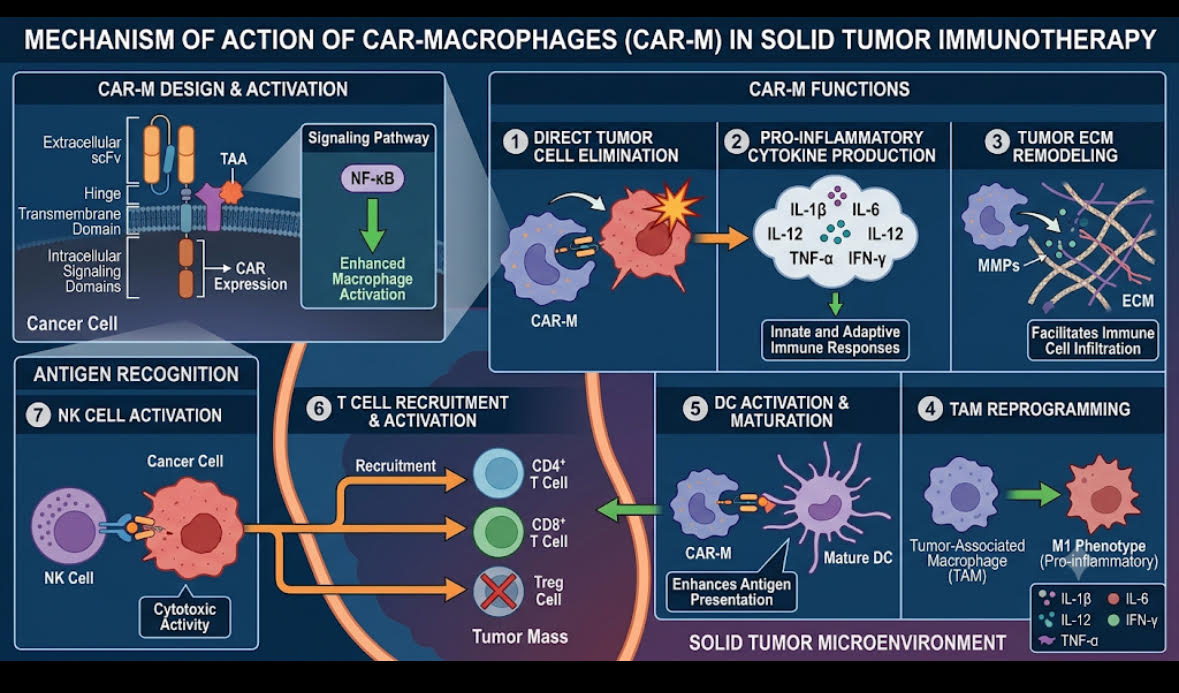
CAR-engineered macrophages (CAR-M) recognize tumor-associated antigens (TAAs) on cancer cells through a chimeric antigen receptor (CAR) composed of an extracellular single-chain variable fragment (scFv), hinge region, transmembrane domain, and intracellular signaling domains. Antigen recognition activates downstream signaling pathways, including NF-κB, leading to enhanced macrophage activation.
Direct tumor cell elimination through antigen-specific phagocytosis.
Production of pro-inflammatory cytokines, including IL-1β, IL-6, IL-12, TNF-α, and IFN-γ, which stimulate innate and adaptive immune responses.
Remodeling of the tumor extracellular matrix (ECM) through secretion of matrix metalloproteinases (MMPs), facilitating immune cell infiltration.
Reprogramming of tumor-associated macrophages (TAMs) toward a pro-inflammatory M1 phenotype.
Activation and maturation of dendritic cells, enhancing antigen presentation and initiation of adaptive immunity.
Recruitment and activation of T cells, increasing infiltration of CD4⁺ and CD8⁺ T cells while reducing immunosuppressive regulatory T (Treg) cells.
Activation of natural killer (NK) cells, promoting their infiltration and cytotoxic activity within the tumor microenvironment.
Collectively, CAR-M therapy combines direct tumor clearance with broad remodeling of the tumor microenvironment, resulting in enhanced innate and adaptive antitumor immunity and making it a promising therapeutic strategy for the treatment of solid tumors.
SHARE
Related Post
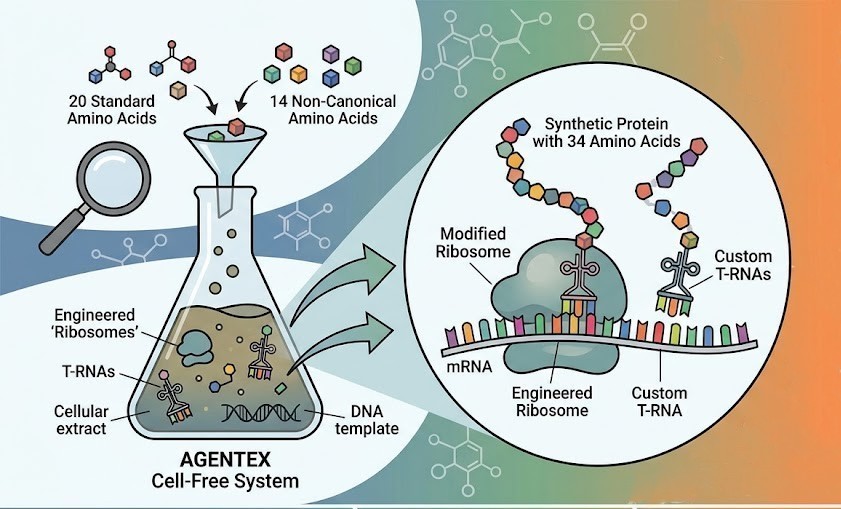
AGENTEX: A New Synthetic Biology Platform Expanding the Possibilities of Protein Engineering
Researchers in Professor George Church’s laboratory at Harvard Medical School, in collaboration...