The remarkable success of mRNA vaccines during the COVID-19 pandemic demonstrated the power of this technology to respond rapidly to global health challenges. Beyond infectious diseases, this platform is now driving one of the most exciting advances in modern medicine: personalized cancer immunotherapy.
For decades, the concept of a “cancer vaccine” was considered an ambitious goal. Today, advances in mRNA technology, genomics, and immunology are turning that vision into clinical reality. Rather than attacking tumors directly, mRNA cancer vaccines train the patient’s own immune system to recognize and eliminate cancer cells with unprecedented precision.
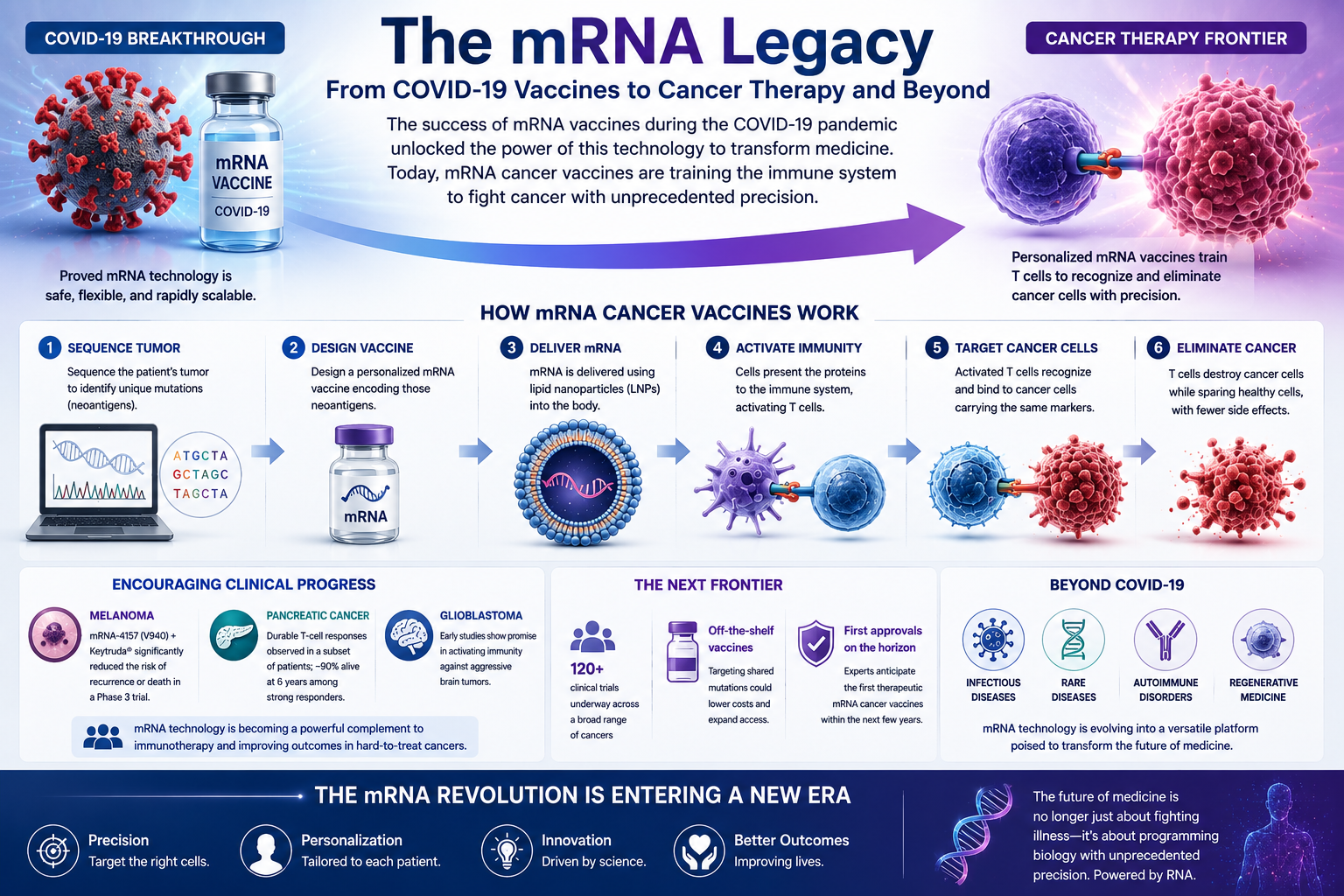
The process begins by sequencing a patient’s tumor to identify unique genetic mutations known as neoantigens—protein markers found only on that individual’s cancer cells.
Scientists then design a personalized mRNA vaccine encoding these neoantigens. After administration using lipid nanoparticles (LNPs), the mRNA enters cells and is translated into proteins. These proteins are presented to the immune system, educating T cells to recognize and destroy cancer cells carrying the same markers.
Unlike conventional chemotherapy, which often affects healthy tissues as well as tumors, mRNA vaccines aim to direct the immune response specifically toward cancer cells, offering the potential for greater precision and fewer side effects.
Clinical studies over the past two years have demonstrated encouraging results across several challenging cancers.
These advances demonstrate that mRNA technology is becoming an important complement to existing immunotherapies and may significantly improve outcomes for patients with difficult-to-treat cancers.
More than 120 clinical trials are currently evaluating mRNA cancer vaccines across a broad range of tumor types. While personalized vaccines remain the leading strategy, researchers are also developing off-the-shelf cancer vaccines targeting mutations shared by many patients. Such vaccines could simplify manufacturing, lower costs, and make these therapies available to far more people.
Many experts anticipate that the first therapeutic mRNA cancer vaccines could receive regulatory approval within the next few years, marking another milestone for RNA medicine.
The COVID-19 pandemic accelerated decades of research into mRNA technology and demonstrated its safety, flexibility, and rapid development potential. That success laid the foundation for applying the same platform to cancer, rare diseases, infectious diseases, autoimmune disorders, and regenerative medicine. Today, we are witnessing the evolution of mRNA from a pandemic response tool into a versatile therapeutic platform capable of transforming modern medicine. The mRNA revolution is entering a new era—one defined by precision, personalization, and innovation. The future of medicine is no longer just about fighting illness—it is about programming biology with unprecedented precision.
SHARE