Cell-to-cell communication is a fundamental biological process that regulates diverse cellular functions, development, and tissue homeostasis. Gap junctions represent one of the most direct forms of cell-to-cell communication, allowing neighboring cells to exchange small molecules and ions through intercellular channels formed by connexin proteins.
While high-resolution structures of individual connexin channels have provided remarkable molecular insights, how these channels assemble into larger gap junction plaques—and how the dynamic organization of these assemblies influences their function—has remained an important unanswered question.
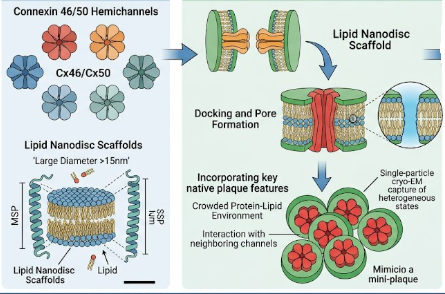
A recent study from researchers at Oregon Health & Science University addressed this challenge by reconstituting connexin 46/50 gap junction channels into lipid nanodiscs designed to capture key features of native plaque organization. Using single-particle cryo-EM, the researchers identified multiple compositional and conformational states and uncovered previously unrecognized protein–lipid interactions that contribute to gap junction architecture.
By creating a membrane environment that bridges isolated channel structures with higher-order assemblies, this study provides new insights into how connexin channels organize within gap junction plaques and how this organization may regulate their biological functions.
This work highlights how advances in cryo-EM technologies and structural analysis are enabling researchers to move beyond individual protein structures toward understanding the larger molecular assemblies that drive complex cellular processes.
SHARE
Related Post
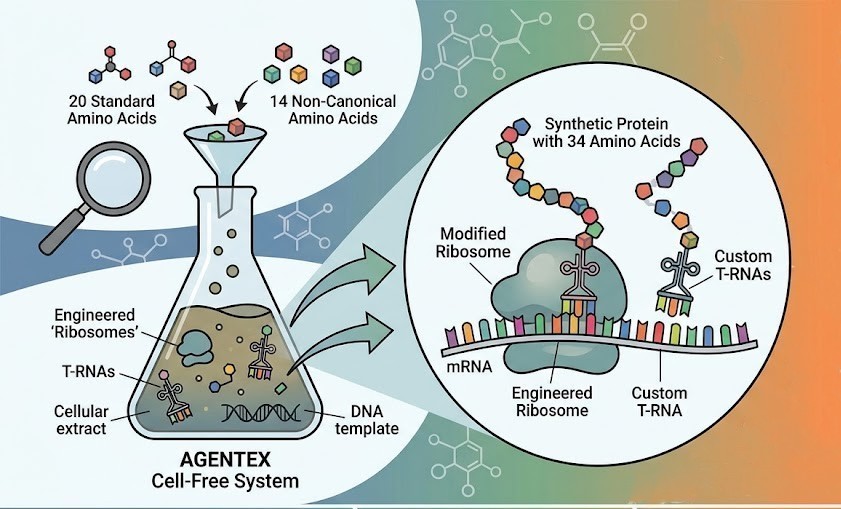
AGENTEX: A New Synthetic Biology Platform Expanding the Possibilities of Protein Engineering
Researchers in Professor George Church’s laboratory at Harvard Medical School, in collaboration...