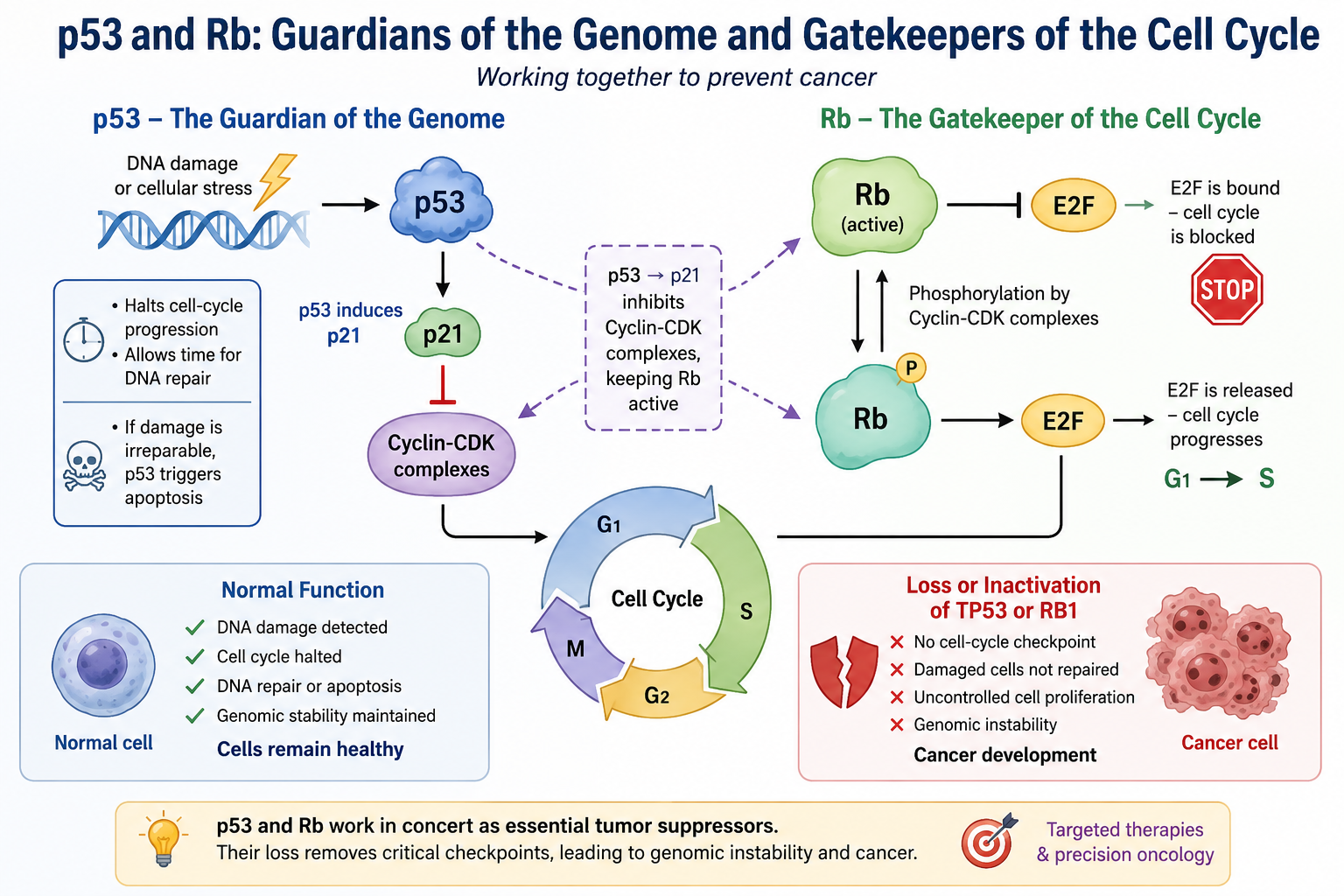
The critical roles of p53 and Rb in preserving genomic integrity and regulating the cell cycle underscore their importance as key tumor suppressors. As the “guardian of the genome,” p53 is activated in response to DNA damage or cellular stress, where it induces p21 to inhibit cyclin-CDK complexes, halting cell-cycle progression and providing time for DNA repair. When the damage is irreparable, p53 initiates apoptosis to eliminate potentially cancerous cells. Rb, the “gatekeeper of the cell cycle,” restrains cell-cycle progression by binding the E2F transcription factor, thereby preventing the G1-to-S phase transition and DNA replication. Through p21-mediated inhibition of cyclin-CDK complexes, p53 helps maintain Rb in its active state, forming a coordinated checkpoint that blocks damaged cells from proliferating. Loss or inactivation of TP53 or RB1 removes these critical safeguards, leading to genomic instability, uncontrolled cell proliferation, and tumor development. Understanding the intricate interplay between these two tumor suppressor pathways continues to shape the development of targeted therapies and precision oncology.
SHARE
Related Post
Fascinating advances in time-resolved structural biology
Researchers from the University of Oxford, SLAC National Accelerator Laboratory, and Lawrence...