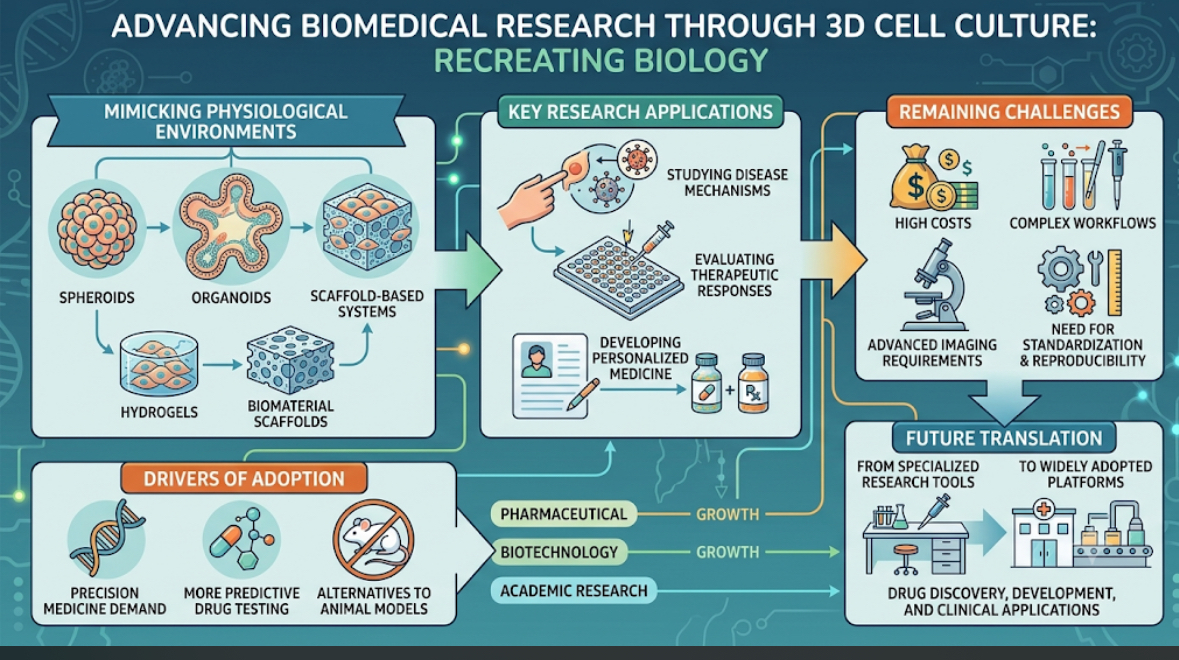
3D cell culture aims to mimic the physiological environments found in nature by allowing cells to grow and organize into more tissue-like structures, including spheroids, organoids, and scaffold-based systems. These advanced models provide more biologically relevant conditions for research, such as studying disease mechanisms, evaluating therapeutic responses, and developing personalized medicine approaches.
In recent years, this has become a rapidly evolving sector, reflecting a broader transformation in biomedical research. The growing demand for precision medicine, more predictive drug testing platforms, and alternatives to animal models is accelerating the adoption of 3D culture technologies across pharmaceutical, biotechnology, and academic research.
Among these approaches, scaffold-based systems, including hydrogels and biomaterial scaffolds, remain widely utilized because they provide structural support and mimic important features of the native cellular microenvironment. Meanwhile, stem cell-derived organoids and patient-specific models are creating new opportunities for precision medicine, regenerative medicine, and disease modeling.
Despite significant progress, challenges remain, including high costs, complex workflows, advanced imaging requirements, and the need for improved standardization and reproducibility. Overcoming these barriers will be critical for translating 3D cell culture technologies from specialized research tools into widely adopted platforms for drug discovery, development, and clinical applications.
The future of biomedical research is moving beyond simply growing cells—it is about recreating biology. 3D cell culture represents a major step toward more predictive, human-relevant, and personalized approaches for understanding disease and developing next-generation therapies.