From Serendipity to Systematic Discovery: A New Strategy for Engineering Molecular Glue Degraders
Molecular glue discovery has historically been challenging because biological activity depends on forming a productive ternary complex between the target protein, small molecule, and recruited effector. However, a recent study represents an important shift from serendipity-driven discovery toward systematic molecular glue engineering.
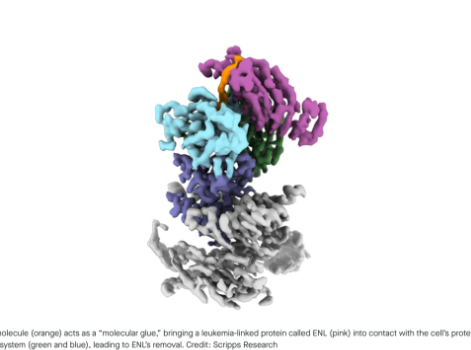
Researchers developed a target-first, high-throughput strategy by modifying ENL and BRD4 ligands with 3,163 diverse chemical building blocks, converting conventional ligands into degraders through remodeling of a single solvent-exposed surface. These subtle chemical changes enabled the creation of new protein–protein interfaces, altered cooperativity, and promoted selective degradation.
The approach identified two new degraders: dHTC1, an ENL degrader that recruits CRL4^CRBN through a cooperative protein–protein interface, and dHTC3, a BRD4 molecular glue that recruits the previously unexplored E3 ligase SCF^FBXO3.
This work demonstrates that molecular glue discovery can move beyond chance discoveries toward a scalable, target-driven platform. By expanding the chemical space available for proximity-based therapeutics, this strategy offers new opportunities to address previously challenging or “undruggable” proteins while revealing new biological mechanisms through unbiased screening.
SHARE
Related Post
AGENTEX: A New Synthetic Biology Platform Expanding the Possibilities of Protein Engineering
Researchers in Professor George Church’s laboratory at Harvard Medical School, in collaboration...