RNA Therapeutics: Reshaping the Future of Precision Medicine
RNA therapeutics are a rapidly growing class of medicines that use RNA molecules to regulate, replace, or correct biological processes. Unlike traditional small-molecule drugs that mainly target proteins, RNA-based approaches can directly control gene expression, offering new ways to treat previously difficult-to-target diseases.
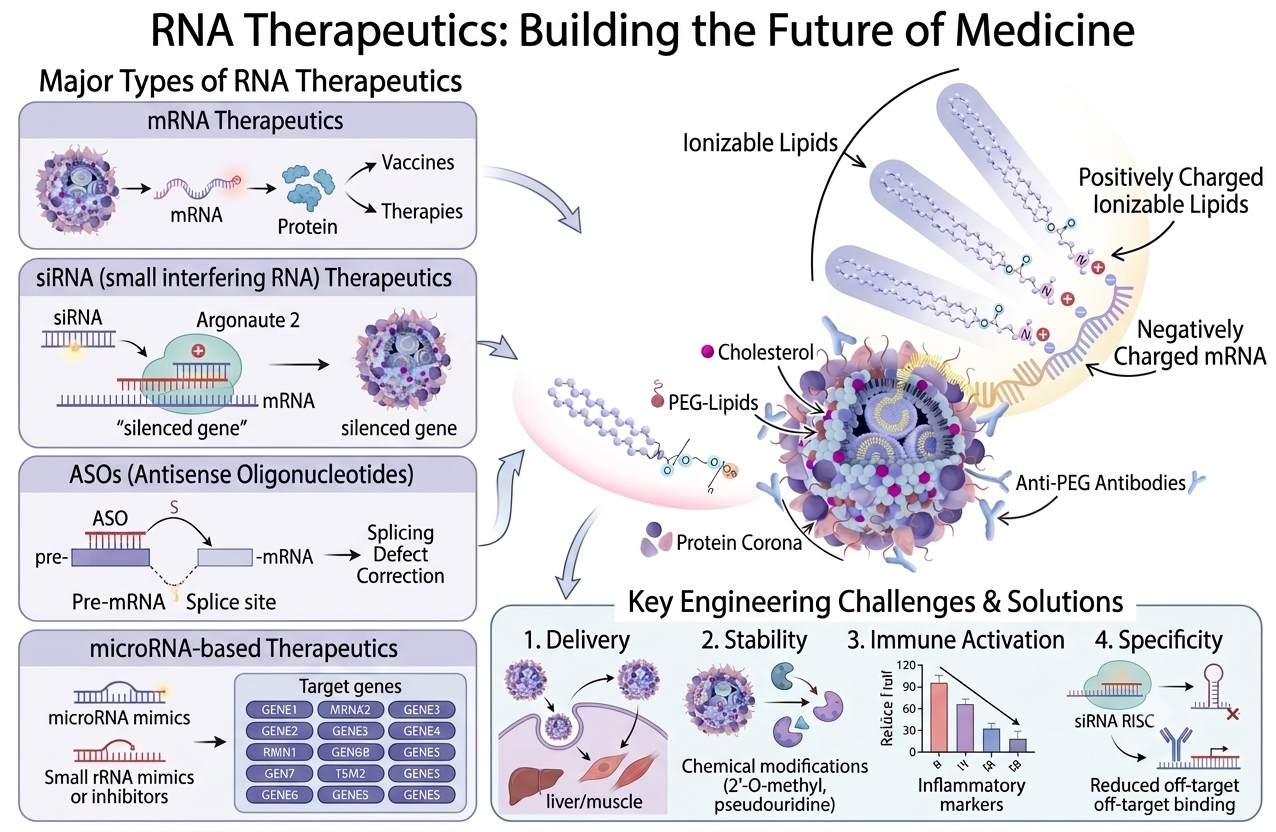
Major types of RNA therapeutics
1. mRNA therapeutics
Deliver messenger RNA to cells to produce a desired protein.
Best known from mRNA COVID-19 vaccines.
Expanding into:
cancer vaccines
protein replacement therapies
regenerative medicine
2. siRNA (small interfering RNA) therapeutics
Use RNA interference (RNAi) to selectively silence specific genes.
siRNA guides the Argonaute 2 protein complex to degrade target mRNA.
Applications include reducing disease-causing proteins in:
genetic disorders
liver diseases
cardiovascular diseases
3. Antisense oligonucleotides (ASOs)
Short synthetic RNA/DNA-like molecules that bind target RNA and alter its stability or processing.
Used for diseases caused by abnormal gene expression or splicing defects.
4. microRNA-based therapeutics
Mimic or inhibit natural regulatory RNAs that control many genes.
Being explored in cancer and fibrosis.
Key challenges
Despite great potential, RNA therapeutics face several engineering challenges:
Delivery: Getting RNA molecules into the correct tissues and cells.