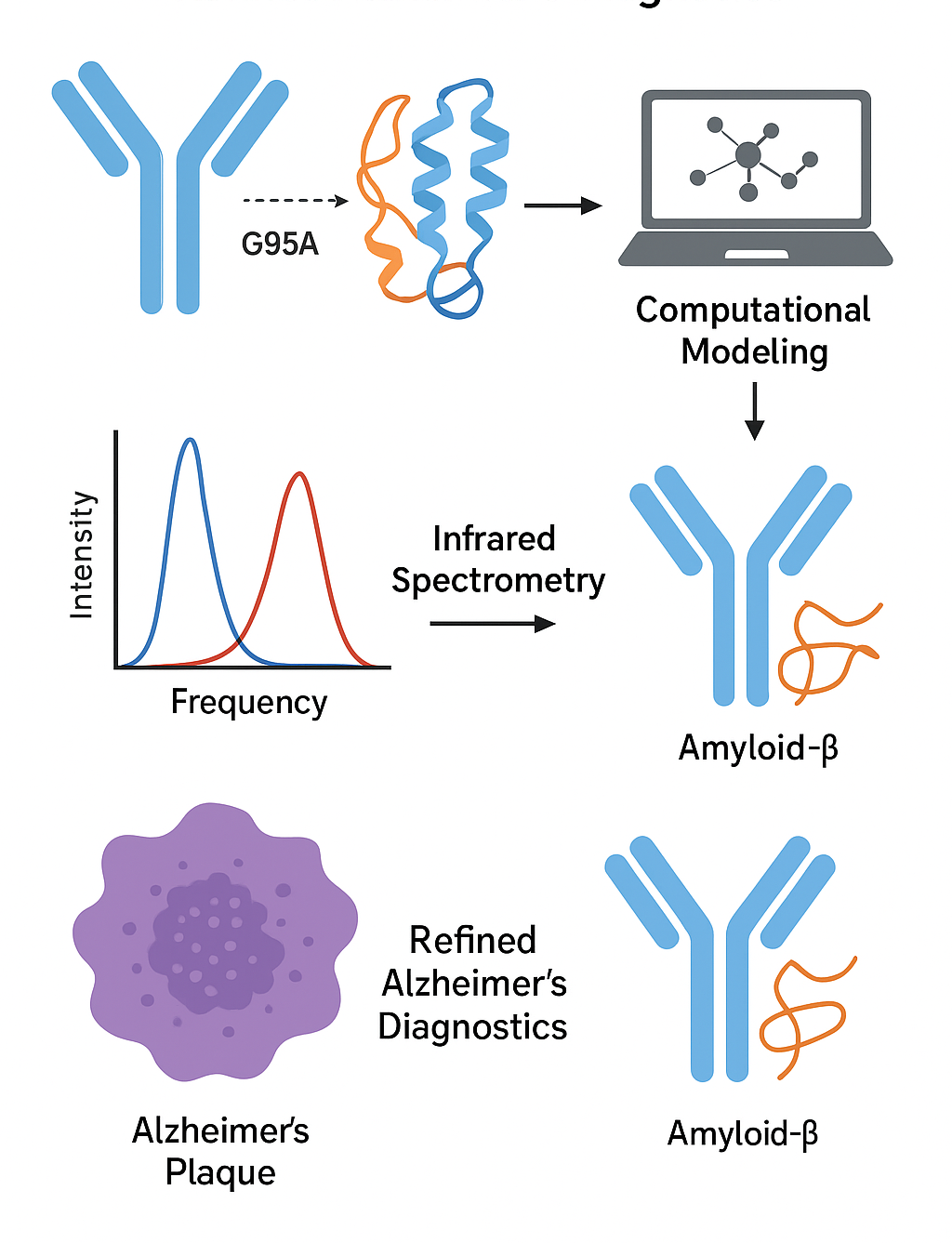
A Single Mutation Validates AI Predictions and Refines Alzheimer’s Diagnostics
In general, antibody-antigen interactions involve broad binding surfaces composed of many amino acids. However, this study demonstrates that even a single amino acid change can completely abolish an antibody’s ability to recognize its target—just as predicted by computational models. The discovery underscores the critical role of essential residues in molecular recognition. By integrating molecular simulations with infrared spectroscopy, researchers successfully validated AI-based protein predictions through experimental evidence, bridging computation and laboratory science. The “dead mutant” antibody (G95A in solanezumab) exemplifies how this approach can refine Alzheimer’s diagnostics, enhance biosensor precision, and advance the development of next-generation biomedicine.