Toward a Cure: The Next Chapter in Type 1 Diabetes Treatment
The treatment of type 1 diabetes is entering a new era marked by three major breakthroughs:
1. Immunotherapy: The FDA approval of the first disease-modifying therapy, teplizumab, marks a shift toward treating type 1 diabetes as an immune-mediated disease. By targeting the condition in its early, presymptomatic stage, immunotherapy offers the potential to delay disease onset and reshape long-term management.
2. Stem Cell Therapy: Advances in stem cell-derived β-cell replacement present a promising alternative to traditional islet transplantation. This approach could eventually lead to a functional cure, enabling natural insulin production without the need for ongoing insulin therapy or extensive immunosuppression.
3. Automated Insulin Delivery (AID) and New-Generation Insulins: AID systems and improved insulin formulations (ultrarapid-acting, ultralong-acting, and glucose-responsive insulins) significantly enhance glucose control and quality of life. These technologies aim to better replicate natural insulin dynamics and support more personalized care.
While insulin therapy has evolved significantly since its discovery over a century ago, life expectancy and complication risks for people with type 1 diabetes—especially those diagnosed at a young age—remain concerns. These three transformative innovations collectively aim to improve outcomes, delay disease progression, and ultimately bring us closer to a cure.
More Reading:
The future of type 1 diabetes therapy.
Ziegler, Anette-Gabriele et al.
The Lancet, September 19, 2025
https://www.thelancet.com/journals/lancet/article/PIIS0140-6736(25)01438-2/fulltext
SHARE
Related Post
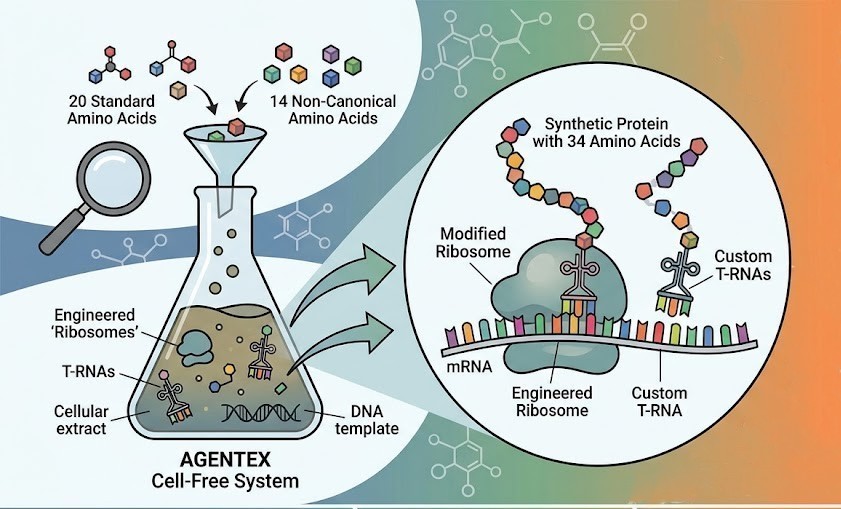
AGENTEX: A New Synthetic Biology Platform Expanding the Possibilities of Protein Engineering
Researchers in Professor George Church’s laboratory at Harvard Medical School, in collaboration...