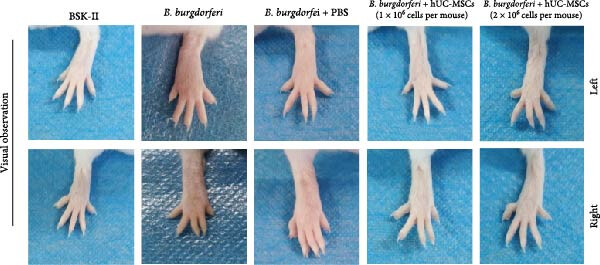
Stem cell therapy is emerging as a powerful approach for treating chronic and hard-to-manage conditions. A new preclinical study highlights its potential in Lyme arthritis (LA)—a painful, inflammatory complication of Lyme disease (LD) that can persist even after antibiotic treatment. Researchers tested human umbilical cord mesenchymal stem cells (hUC-MSCs) in a mouse model of LA, delivering low or high doses directly into affected joints. Mice were infected with Borrelia burgdorferi, the bacterium that causes LD, and then treated with hUC-MSCs every other day. The treatment significantly reduced joint swelling, tissue damage, and levels of inflammatory markers like IL-6 and TNF-α. Importantly, the stem cells did not increase the bacterial load, suggesting they help control inflammation without worsening the underlying infection. These findings suggest that hUC-MSCs could offer a new therapeutic option for Lyme arthritis patients who continue to experience symptoms after antibiotics—providing relief while avoiding risks of bacterial resurgence.
More Reading
Mesenchymal Stem Cells Reduce Inflammation in a Mouse Model of Lyme Arthritis
DOI: 10.1155/sci/4363386
SHARE
Related Post
AGENTEX: A New Synthetic Biology Platform Expanding the Possibilities of Protein Engineering
Researchers in Professor George Church’s laboratory at Harvard Medical School, in collaboration...